Abstract
This study investigated the comparative effectiveness of Problem-Based Learning (PBL) and Lecture-Based Learning (LBL) in the teaching of redox reactions to Senior High School students in Ghana. The central objective was to examine which of the two pedagogical approaches yields better achievement outcomes, as measured by students’ mean scores in knowledge, comprehension, and application of redox concepts. The study was designed to provide evidence for determining which method is more suitable and effective for enhancing learning in chemistry classrooms, particularly for abstract and challenging concepts such as redox reactions. A pure experimental design was adopted, involving 36 Senior High School chemistry students who were randomly assigned to two groups: the PBL group (experimental) and the LBL group (control). Both groups were assessed through a series of pre-tests, immediate post-tests, and delayed post-tests. These assessments were carefully structured to capture three levels of learning outcomes: knowledge recall, conceptual comprehension, and application of redox principles. The use of the t-test helped establish the level of equivalence between the groups and to determine the statistical significance of observed differences in performance. While both groups demonstrated similar prior knowledge, students taught through PBL consistently achieved higher performance across knowledge, comprehension, and application of redox principles in both immediate and delayed assessments. These results indicate that PBL promotes deeper understanding and longer-lasting learning compared to the traditional lecture approach. These findings provide robust evidence that PBL enhances not only short-term learning gains but also long-term retention of redox concepts. By engaging students in problem-solving activities and encouraging active participation, PBL allows learners to develop a more meaningful understanding of abstract chemical processes compared to the traditional lecture approach, which often emphasizes rote memorization. Educationally, the findings highlight the value of learner-centered strategies in improving students’ mastery of abstract chemistry concepts. By actively engaging students in problem-solving and critical thinking, PBL supports meaningful learning rather than rote memorization. The study therefore underscores the need for chemistry teachers and curriculum developers to adopt PBL approaches to enhance conceptual understanding, retention, and problem-solving skills at the Senior High School level.
Keywords
Problem-Based Method, Lecture-Based Method, Redox Equations, Teaching Strategies
1. Introduction
Science education has attained an enviable position in schools across the world, including Ghana. It is especially crucial at the senior high school level, where science education can serve three primary purposes
. Firstly, it equips students with knowledge, preparing them for advanced studies in science
| [5] | Aina, J. K. (2013). Instructional materials and improvisation in physics class: Implications for teaching and learning. Journal of Research and Method in Education, 2(5), 38–42. |
| [27] | Taber, K. S. (2020). Conceptual confusion in the chemistry curriculum: Exemplifying the problematic nature of representing chemical concepts as target knowledge. Foundations of Chemistry, 22(3), 309–334. |
[5, 27]
. Secondly, it helps them comprehend the practical applications of science, preparing them to enter the technological workforce and pursue careers in related fields
| [4] | Aidoo, B., Boateng, S. K., Kissi, P. S., & Ofori, I. (2016). Effect of problem-based learning on students’ achievement in chemistry. Journal of Education and Practice, 7, 103–108. |
| [10] | Darling-Hammond, L., Schachner, A. C. W., Wojcikiewicz, S. K., & Flook, L. (2024). Educating teachers to enact the science of learning and development. Applied Developmental Science, 28(1), 1–21.
https://doi.org/10.1080/10888691.2022.2130506 |
[4, 10]
. Thirdly, it fosters scientific literacy, allowing students to apply theoretical knowledge to solve everyday problems
| [5] | Aina, J. K. (2013). Instructional materials and improvisation in physics class: Implications for teaching and learning. Journal of Research and Method in Education, 2(5), 38–42. |
[5]
. This aim can be realized when students are engaged in challenging science lessons in ways that promote deep conceptual understanding, where knowledge of scientific principles leads to comprehension and the ability to apply these concepts to real-world scenarios
| [16] | Ketpichainarong, W., Panijpan, B., & Ruenwongsa, P. (2010). Enhanced learning of biotechnology students by an inquiry-based cellulose laboratory. International Journal of Environmental and Science Education, 5(2), 169–187. |
[16]
.
Science education not only provides explanations for significant phenomena in the natural world but also addresses numerous issues facing modern society
| [25] | Owusu, M., Assem, H., Ossei-Anto, T., Ansah, F., & Darko, G. (2024). Challenges in understanding the redox reaction concept among level 200 students in science colleges of education in Ghana. Creative Education, 15, 2187–2211. |
[25]
. Developed nations, which have excelled in science and technology, emphasize the im-portance of science education as a foundational element for their economic and technological advancement
. The knowledge gained through science education drives invention, innovation, and development, which are essential for human progress. For countries, especially those in development, prioritizing science and technology is key to improving the quality of life and advancing economic and social development
| [24] | Osborne, J., & Dillon, J. (2008). Science education in Europe: Critical reflections. London: The Nuffield Foundation. |
[24]
. The goals of science education aim to foster a harmonious relationship with the environment and lay a solid foundation for future scientific studies through the development of both cognitive skills and application
.
To achieve this, science educators must employ teaching methods that enhance students' comprehension of science and enable them to apply in their learning
| [31] | Youngerman, E., & Culver, K. (2019). Problem‐based learning (PBL): Real‐world applications to foster (inter) disciplinary learning and integration. New Directions for Higher Education, 2019(188), 23–32. |
[31]
. The 2007 and 2010 editions of Ghana’s integrated science syllabus emphasize promoting conceptual understanding and problem-solving skills, crucial for scientific inquiry
| [24] | Osborne, J., & Dillon, J. (2008). Science education in Europe: Critical reflections. London: The Nuffield Foundation. |
[24]
. One key approach is to develop critical thinking and problem-solving abilities, as well as communication skills, among students
| [18] | Kotsis, K. T. (2024). Significance of Experiments in Inquiry-based Science Teaching. European Journal of Education and Pedagogy, 5(2), 86–92.
https://doi.org/10.24018/ejedu.2024.5.2.815 |
| [19] | Laurillard, D. (2002). Rethinking university teaching: A conversational framework for the effective use of learning technologies (2nd ed.). RoutledgeFalmer. |
[18, 19]
. These skills are essential for not only mastering scientific concepts but also for transferring knowledge from theory to practice
| [11] | De Jong, O., & Treagust, D. (2002). The teaching and learning of electrochemistry. Journal of Research in Science Teaching, 17, 317–337. |
[11]
.
However, one of the challenges that persist is students’ difficulties with conceptualizing and applying scientific concepts. For instance, educators have identified redox reactions particularly as a challenging topic
| [2] | Adu-Gyamfi, K., Ampiah, J. G., & Agyei, D. D. (2020). Participatory teaching and learning approach: A framework for teaching redox reactions at high school level. International Journal of Education and Practice, 8(1), 106–120. |
[2]
. Students often struggle to comprehend electron transfer and apply this understanding to solve real-world problems
| [12] | Engeness, I. (2019). Teacher facilitating of group learning in science with digital technology and insights into students’ agency in learning to learn. Journal of Research in Science and Technological Education, 38(3), 1–17. |
[12]
. Misconceptions, such as the belief that oxygen is always present in redox reactions, hinder the students' ability to accurately apply their knowledge
| [26] | Sayed Munna, A., & Kalam, A. (2021). Teaching and learning process to enhance teaching effectiveness: A literature review. International Journal of Humanities and Innovation (IJHI), 4(1), 1–4. |
[26]
. Such challenges highlight the gap between theoretical knowledge and practical application, a gap that must be bridged for students to become effective problem-solvers
| [14] | Gunter, T., & Alpat, S. K. (2017). The effects of problem-based learning (PBL) on the academic achievement of students studying electrochemistry. Journal of Chemical Research and Practice, 18, 78–98. |
[14]
. The low standards of science education and the difficulties in applying theoretical knowledge to real-life contexts have been a cause for concern. Many Senior High School graduates find it challenging to solve work-related problems using their scientific understanding, which is partly due to the lecture-based teaching method prevalent in many schools. The integrated science syllabus calls for a shift from rote learning to methods that foster problem-solving and the development of critical thinking
| [24] | Osborne, J., & Dillon, J. (2008). Science education in Europe: Critical reflections. London: The Nuffield Foundation. |
[24]
.
2. Problem-Based Learning Verse Lecture-based Learning
The lecture-based method of teaching has been one of the most traditional and widely used forms of instruction in educational settings in Ghana
| [5] | Aina, J. K. (2013). Instructional materials and improvisation in physics class: Implications for teaching and learning. Journal of Research and Method in Education, 2(5), 38–42. |
[5]
. Despite the increasing integration of technology and more interactive teaching methods, the lecture remains a central component of education at various levels, from primary to higher education. Lecture-based teaching (LBL) has been found to encourage passive learning, where students memorize facts without developing a deeper comprehension of those facts
| [23] | Ministry of Education Science and Sports. (2012). Teaching syllabus for natural science (Primary 1–3). Accra, Ghana. |
[23]
. This has led to concerns about the effectiveness of lectures in fostering critical thinking and application of knowledge
| [20] | Lohman, M. C. & Finkelstein, M. (2000). Designing groups in problem-based learning to promoteproblem solving skills and self-directedness. Instructional science, 28(4), 291-309. |
[20]
. A potential solution to this problem, is Problem-Based Teaching method (PBL), an approach that promotes active learning by situating problems at the core of the teaching process. PBL encourages students to collaborate and develop solutions, fostering the application of their knowledge and comprehension of science concepts Through this method, students engage in the collection and analysis of data, make observations, and draw conclusions, which enables them to see the relevance of scientific concepts in addressing real-world issues
. Research supports the efficacy of PBL, showing that it leads to better performance outcomes, particularly in chemistry
| [9] | Basheer, A., Hugerat, M., Kortam, N., & Hofstein, A. (2017). The effectiveness of teachers’ use of demonstrations for enhancing students’ understanding of and attitudes to learning the oxidation-reduction concept. Eurasia Journal of Mathematics, Science and Technology Education, 13(3), 555–570. https://doi.org/10.12973/eurasia.2017.00632a |
[9]
. This method, by promoting experiential learning, allows students to move from knowledge acquisition to comprehension and application, effectively bridging the gap between theory and practice
| [17] | Klutse, G. Y. (2021). A Novel Approach to Integrated Science Teaching and Learning in a Selected Ghanaian Junior High School. The European Educational Researcher, 4(1), 1–27. |
[17]
.
In chemistry, learners need to actively construct their own personal awareness and meaning. Procedures following are critical in learning concepts like balancing of redox equation, finding solubility of substances and others which according to Taber
| [28] | Tarhan, L., & Şeşen, B. A. (2013). Problem-based learning in acids and bases: Learning achievements and students’ beliefs. Journal of Baltic Science Education, 12(5), 565–578. |
[28]
. are perceived to be difficult for most Senior High science students. Problem-based learning is a teaching method characterized by using problems as a context for students to develop problem solving and collaboration skills in small groups while learning conceptual content
. The teacher's role in this approach is to facilitate the grouping process and instruction
| [13] | Goitom, G., Berhe, G. M., Tesfemariam, G., & Hagos, W. (2024). Challenges for effective teaching of chemistry in secondary schools of developing countries: A review. African Journal of Chemical Education (AJCE), 14(2), 14–26. |
[13]
. Several work in using problem-based method of teaching have been carried out among researchers across the world. In Gunter & Alpat
| [15] | Kelley, T. R., & Knowles, J. G. (2016). A conceptual framework for integrated STEM education. International Journal of STEM Education, 3(1), 11. |
[15]
. studies on the impact of problem-based learning on the academic achievement of students in electrochemistry, a notable difference in scores was found between students in the PBL and LBL groups, with the former showing a significant advantage. A recent work by Al-Najjar et al.,
| [7] | Aquah, S., Emma, S. E., & Anthony, A. (2013). Towards a more effective education process in Ghana: Teachers’ coping strategies in teaching natural science. Journal of Education and Curriculum Development Research, 2(1), 81–92. |
[7]
in their study on Problem-Based Teaching (PBL) Versus Lecture based Teaching (LBL) in Nursing Students, concluded that PBL encourages productive group collaboration while also boosting active learning and fostering critical thinking skills. It was found out by Adu-Gyamfi, et al
| [1] | Adu-Gyamfi, K., Ampiah, J. G., & Agyei, D. D. (2018). Teachers’ problems of teaching oxidation-reduction reactions in high schools. European Journal of Education Studies, 5(5), 53–70. |
[1]
that, weak instructional strategies by teachers are one of the causes of poor performance of students in chemistry questions related to redox reaction in WASSCE exams. They therefore recommended that teachers should select the most appropriate strategies when teaching students to increase understanding.
The study was guided by the following objectives: Determine the variance in average scores of the PBL and LBL in the immediate post-test on the redox reaction achievement test; Determine the difference between the mean score in the redox reaction achievement test of the PBL and LBL on the additional post-test; To assess whether there exists a notable difference among students' mean scores of the students in knowledge, comprehension, and application regarding a redox reaction achievement test.
3. Methods and Materials
The use of appropriate teaching methodology is one of the important factors that can enhance the achievement of the aims of science education in Ghana, for instance, enquiry and problem-based approach of teaching which make science lessons activity-based and learner-centered
. The use of more practical than theory in the teaching of science would be effective. Teaching science demands access to advanced practical and suitable instructional resources, which may not be readily available to many educational systems in developing countries. Educators in such nations must innovate in their teaching methods to enhance comprehension and stimulate students' interest in science. As the education paradigm is shifting towards more practical approach, teachers have to find ways of practicalizing the teaching of science using locally and readily available low-cost materials. Performing of activities and developing skills in science should be encouraged in the process of science teaching rather than the traditional way of memorization and reasoning. One major factor for poor performance among learners in science is the abstract manner in which scientific concepts are taught in the class room
| [6] | Al-Najjar, H., Khalil, A. I., Abu Bakar, S. A., & Abdul Aziz, N. S. (2019). Problem-based (PBL) versus lecture-based learning (LBL): Effect on the development of critical thinking, problem-solving, and self-directed learning skills in nursing students. Journal of Nursing & Care, 8(1), 489. |
[6]
.
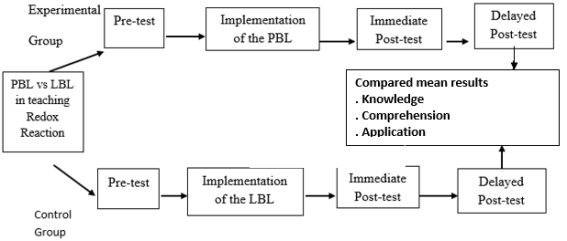
Figure 1 illustrates the use of problem-based and lecture-based approaches in teaching learners how to balance redox equations, and ascertaining their effectiveness towards learner understanding.
Figure 1. PBL vs LBL in teaching Redox Reaction.
In this study, a conceptual framework outlines the process for evaluating the effectiveness of Problem-Based Learning (PBL) in an experimental group and Lecture-Based Learning (LBL) in a control group. The framework integrates a series of steps: pre-test, intervention, immediate post-test, and an additional post-test to assess learning outcomes over eight-week period.
Pre-test: Before the intervention, both the experimental and control groups took a pre-test to assess their baseline knowledge and understanding of the subject matter. This step ensured that any differences in outcomes could be attributed to the intervention rather than pre-existing knowledge disparities.
The experimental group experienced the intervention using Problem-Based Learning. PBL focuses on student-centered learning where learners tackle complex problems, enhancing critical thinking, collaboration, and practical application of knowledge. The control group received the traditional Lecture-Based Learning approach, where content is primarily delivered through instructor-led lectures, and students engage less in problem-solving or collaborative activities. This phase aims to provide data on how each teaching method influences students' understanding and skill development. Right after the intervention, both groups will take an immediate post-test. This test measures how well the students have grasped the content following the specific teaching method they underwent. After some time has passed, an additional post-test will be administered to assess the retention and long-term learning effects. This post-test is designed to evaluate whether the skills and knowledge gained through PBL or LBL have been retained and applied effectively over time.
4. Research Design
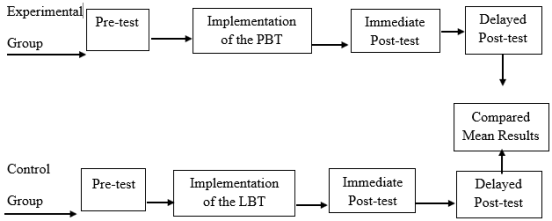
The philosophical stand point of this research was positivism, which employs the quantitative research approach for the study. The pure-experimental design (pre-test/post-test control group design) was used, because the study was to investigate a situation where the classes were not intact and random selection was possible. The pre-test/post-test control group design was used because the study attempted to investigate the impact of two teaching approaches (PBL approach and LBL approach) on two similar groups (control and experimental). The diagram below illustrates the pre-test/post-test control group design of the pure-experimental design.
Figure 2. Pre-test/post-test control group design of the pure-experimental design.
4.1. Population, Sample and Sampling Techniques
The target population for the study was three Public Senior High Schools in the Bunkpurugu-Nakpanduri district. However, the accessible population was 36 first-year, second-year and third-year chemistry learners in Bunkpurugu Senior High Technical School. This school was purposively chosen due to its proximity to the researcher. Besides the proximity, the school was also selected because of; (a) the challenges the school has with teaching methodology concerning the teaching redox reaction (b) willingness of the school to accommodate the study, (c) availability of enough chemistry learners in the science classes (at least 13 students in each class). Thirty-six, 36 learners were randomly selected using the Krejeie and Morgan table for selecting sample size. The 36 learners were further randomly grouped into 18 learners each for the control group and the experimental group. The random selection into the control and experimental groups was done at the year levels in order to avoid the chances of one class going into one of the design groups. Each group had equal number of first, second and third years.
4.2. Treatment of the Two (2) Groups
Before the teaching, both groups received a pre-test (Relevant Previous Knowledge Test) to check how much prior knowledge the students already possessed. The test took about forty-five minutes. Then, the PBL group students were separated into groups. As per Lohman and Finkelstein
| [21] | Marcourt, S. R., Aboagye, E., Armoh, E. K., Dougblor, V. & Ossei-Anto, T. A. (2022). Teaching Method as a Critical Issue in Science Education in Ghana. Social Education Research, 82–90. |
[21]
, studies indicate that very small student groups (three individuals or less) attain learning outcomes more efficiently than medium or large groups. Taking this concern, in this study students were grouped into three and were given a guide developed by the researcher to be used to solve the problems in Redox equations during the lesson. In order to respect time and also to make use of technology, the teacher introduced the lesson by stating the objectives of the lesson after which the class was guided though the theory of redox reaction. Here, the definition of basic concepts such as reaction, oxidation and their examples were given. The teacher then guided the class on how the guide will be used to balancing redox equations using with the aid of power point presentation since the teacher had an in-depth knowledge in computer application in education. The students searched through the list of reactions given them and identified those that were redox after which they identified the medium by which those reactions were taking place. They then solved the equations using the steps stated in the guide. The students then shared with their fellows from other groups by stating any step they discovered that was not found in the guide.
On the other hand, those students who were under lecture-based learning were taught according to the text books. Questioning was employed, but the class was strongly requested not to interact with each other once 60-minutes lessons begin. This approach is mostly used by chemistry teachers in Ghanaian senior high schools.
4.3. Research Instruments
Data from the students were gathered using a pre-test, an immediate post-test, and additionally delayed post-test. Each test item consisted of a 10-item based on the first three (3) ranks of the Blooms’ taxonomy i.e., knowledge, comprehension and application. Each of the test consisted of three knowledge-based questions, three comprehension-based question and four application-based questions based on the principles of balancing of Redox reaction. All the tests were compiled by the researcher based on the same principles of Redox reaction. The pre-test called Relevant Previous Knowledge Test (RPKT) was used to assess students’ prior knowledge and difficulties in balancing Redox reaction before the interventions. The short-term impact of the students on the concept was assessed using the Redox Equation Concept Test (RECT), conducted immediately after the study. The post-test also called Redox Equation Achievement Test (REAT) was used a month later to evaluate the long-term impact of the two methods of teaching balancing of redox reactions. Each of the test items consisted of ten (10) test items of unbalanced redox equations. Five marks was rewarded to correct and complete answer, with a total score of fifty (50) marks.
4.3.1. Validity of the Instrument
Content validity is the process of determining if a test accurately represents a relevant universe or domain of content. The tests items were therefore distributed to some Senior Chemistry Lecturers in the Department of Science Education, CK TEDAM University of Technology and Applied Science and a Senior High School chemistry teacher with several years of experience to determine its validity.
4.3.2. Reliability of the Instrument
To determine the reliability of the instruments for this study, the three instruments were pilot-tested in Bunkpurugu Senior High School in the North East Region of Ghana using 40 Agric science students and the reliability analysis was performed. The reliability coefficients of these three instruments are summarized in
Table 1:
Table 1. The reliability Coefficients of the Three Research Instruments.
Variable | Cronbach alpha |
Pre-test (RPKT) | 0.75 |
Immediate post-test (RECT) | 0.77 |
Additional Post-test (REAT) | 0.78 |
Before commencing the study, the research protocol was submitted to and reviewed by an institutional ethics review board to ensure compliance with ethical standards. Any concerns raised by the board was addressed before data collection began. All participants in the study were fully informed about the nature and purpose of the research. Consent forms clearly explained the research objectives, the voluntary nature of participation, and the procedures involved. Participants were given the opportunity to ask questions before they agreed to take part. They were informed that they can withdraw from the study at any time without any negative consequences. When it comes to privacy and confidentiality, all participants were ensured that personal information and data collected during the research will be anonymized to protect participant identities and all data will be securely stored in encrypted files, and access will be limited to authorized personnel only. Data will be retained for the duration of the study and destroyed after the research findings are published or as per the institution's data retention policy.
4.4. Data Analysis
T-test was the main statistic for analysis but much attention was paid to the mean score and the p-values hence these have been reported accordingly. The means were compared in tables to analyze both the short- term and long -term effects on problem-based teaching and lecture-based teaching. The independent T-test was utilized once more. Two-Tailed tests were chosen to assess the statistical significance of effects because the hypotheses being tested were bi-directional. For all tests, the conventional α ≤ 0.05 level of probability was chosen as the threshold for rejecting each of the assumed null hypothesis, and the tabulated results show statistical insignificance only at or above this chosen probability level. Descriptive analysis of data did not feature in the analysis of the gender differences in performance since the mean scores of the text for the various groups were compared. In this, the standard deviation and others were easily computed.
5. Results
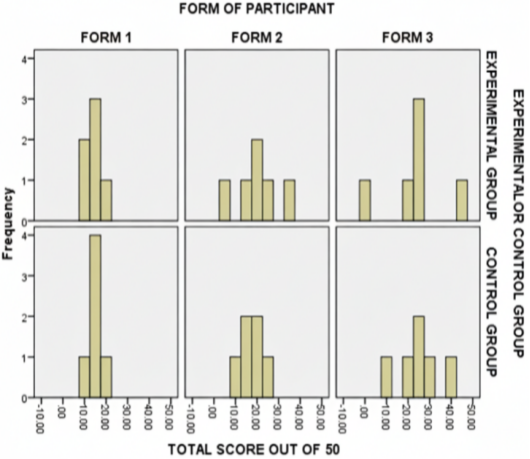
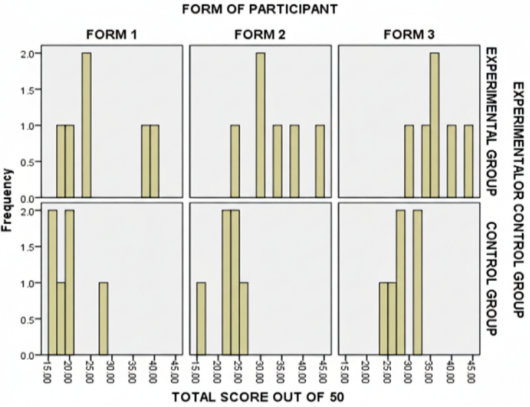
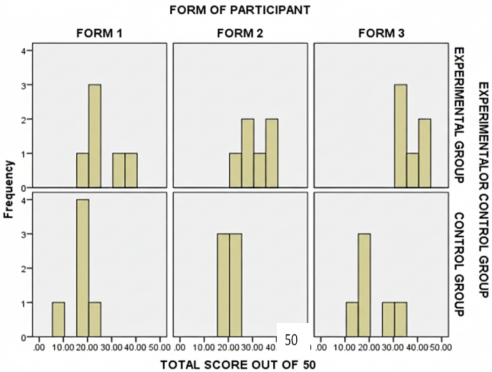
The learners’ previous knowledge in balancing redox equations was tested. They were further tested immediately after the intervention and after one month of intervention. The outcomes are illustrated in the ensuing Figures and Tables below.
Figure 3. Pretest results on learners’ previous knowledge.
The descriptive results in
Figure 3 were further analyzed using the t-test to ascertain the difference in the mean scores. These is illustrated in the Tables below.
Table 2. T-test result of pre-test between PBL Group and LBL Group.
Category | N | Mean | SD | df | t | p |
Problem-Based | 18 | 18.94 | 10.26 | 34.00 | 0.33 | |
Group | | | | | | 0.74 |
Lecture-Based | 18 | 19.94 | 7.63 | 31.39 | 0.33 | |
Group | | | | | | |
The pre-test was conducted for both groups in order to measure students’ prior knowledge in Redox reaction before they were introduced to the two teaching pedagogies.
Figures 3 to 5 shows learners overall performance in the achievement test.
Table 2 shows the statistical comparison of mean scores between participants in the two categories (PBL and LBL). The learners in PBL had a mean score of 18.94 in the pre-test whiles the learners in the LBL group had a mean score of 19.94. The difference in the mean scores of the pre-test between the two groups was not found to be statistically significant (p = 0.74). This indicates that, the prior knowledge of the participants in Redox reaction before they were introduced to the two teaching pedagogies did not differ significantly. The variability within each group, as shown by the standard deviations, also suggests that the spread of scores is somewhat larger in the PBL group compared to the LBL group.
Figure 4. Learners’ immediate post test results.
The descriptive results in
Figure 4 were further analyzed using the t-test to ascertain the difference in the mean scores. These is illustrated in the Tables below.
Table 3. T-test result of Immediate post-test between PBL Group and LBL Group.
Category | N | Mean | SD | df | t | p |
Problem-Based | 18 | 32.00 | 7.88 | 34.00 | 4.00 | |
Group | | | | | | 0.00 |
Lecture-Based | 18 | 23.11 | 5.15 | 29.30 | 4.00 | |
Group | | | | | | |
Table 3 shows the statistical comparison of mean scores between participants in the two categories (PBL and LBL) in the immediate post-test. The mean score for students in the PBL group was 32.00 in the immediate post-test, whereas the mean score for students in the LBL group was 23.11. A statistically significant disparity in the mean scores of the immediate post-test between the two groups was noted (p = 0.00). The variability within each group, as shown by the standard deviations, also suggests that the spread of scores is somewhat larger in the PBL group compared to the LBL group.
Figure 5. Learners’ delayed post test results.
The descriptive results in
Figure 5 were further analyzed using the t-test to ascertain the difference in the mean scores. These is illustrated in the Tables below.
Table 4. T-test result of additional post-test between PBL Group and LBL Group.
Category | N | Mean | SD | df | t | p |
Problem-Based | 18 | 31.56 | 7.07 | 34.00 | 5.61 | |
Group | | | | | | 0.00 |
Lecture-Based | 18 | 19.72 | 5.50 | 34.04 | 5.61 | |
Group | | | | | | |
Table 4 shows the statistical comparison of mean scores between participants in the two categories (PBL and LBL) for the additional post-test. The mean score for students in the PBL group was 31.56 in the additional post-test, while the mean score for students in the LBL group was 19.72. A statistically significant difference in the mean scores of the additional post-test between the two groups was observed (p = 0.00). The variability within each group, as shown by the standard deviations, also suggests that the spread of scores is somewhat larger in the PBL group compared to the LBL group.
Table 5. T-test result of application for immediate and additional post-test between PBL and LBL.
Category | Test Type | N | Mean | SD | df | t | p |
Problem-Based | Immediate | 18 | 10.50 | 3.90 | 34.00 | 4.20 | 0.00 |
Group | Additional | 18 | 11.33 | 3.71 | 34.00 | 4.75 | 0.00 |
Lecture-Based | Immediate | 18 | 5.44 | 3.30 | 33.08 | 4.20 | 0.00 |
Group | Additional | 18 | 6.00 | 3.00 | 32.50 | 4.75 | 0.00 |
Table 5 contains the statistical comparison of the mean scores between participants in the two categories (PBL and LBL) for sub-level (application) in both immediate post-test and additional post-test. For the immediate post-test, students in PBL obtained a mean score of 10.50 whilst those in LBL obtained a mean score of 5.44. The difference in the mean score between these two categories of students showed statistically significant with p=0.00. For the additional post-test, the mean score was 11.33 and 6.00 for PBL and LBL groups respectively with p = 0.00.
Table 6. T-test result of comprehension for immediate and additional post-test between PBL and LBL.
Category | Test Type | N | Mean | SD | df | t | p |
Problem-Based | Immediate | 18 | 11.00 | 3.18 | 34.00 | 2.36 | 0.02 |
Group | Additional | 18 | 9.94 | 2.39 | 34.00 | 4.08 | 0.00 |
Lecture-Based | Immediate | 18 | 8.89 | 2.08 | 29.32 | 2.36 | 0.02 |
Group | Additional | 18 | 6.78 | 2.26 | 33.90 | 4.08 | 0.00 |
Table 6 contains the statistical comparison of the mean scores between participants in the two categories (PBL and LBL) for sub-level (comprehension) in both immediate post-test and additional post-test. For the immediate post-test, students in PBL obtained a mean score of 11.00 whilst those in LBL obtained a mean score of 8.89. The difference in the mean score between these two categories of students showed statistically significant with p=0.02. For the additional post-test, the mean score was 9.94 and 6.78 for PBL and LBL groups respectively with p = 0.00.
Table 7. T-test result of knowledge for immediate and additional post-test between PBL and LBL.
Category | Test Type | N | Mean | SD | df | T | p |
Problem-Based | Immediate | 18 | 10.50 | 2.64 | 34.00 | 2.20 | 0.04 |
Group | Additional | 18 | 10.27 | 2.11 | 34.00 | 5.32 | 0.00 |
Lecture-Based | Immediate | 18 | 8.78 | 2.01 | 31.80 | 2.20 | 0.04 |
Group | Additional | 18 | 6.83 | 1.76 | 32.92 | 5.32 | 0.00 |
Table 7 contains the statistical comparison of the mean scores between participants in the two categories (PBL and LBL) for sub-level (knowledge) in both immediate post-test and additional post-test. For the immediate post-test, students in PBL obtained a mean score of 10.50 whilst those in LBL obtained a mean score of 8.78. The difference in the mean score between these two categories of students showed statistically significant with p=0.04. For the additional post-test, the mean score was 10.27 and 6.83 for PBL and LBL groups respectively with p = 0.00.
6. Discussions
The statistical results indicate that there was no significant difference in the prior knowledge of students in the Problem-Based Learning (PBL) and Lecture-Based Instruction (LBL) groups, as evidenced by the pre-test results. Specifically, the mean scores of the two groups were 18.94 for the PBL group and 19.94 for the LBL group. The p-value of 0.74, which is well above the conventional significance threshold of 0.05, shows that the difference in the pre-test scores is statistically insignificant. This suggests that both groups had comparable levels of understanding of Redox reactions before the intervention began. Additionally, the variability within each group, as indicated by the standard deviations (10.26 for the PBL group and 7.63 for the LBL group), reveals that the spread of scores was wider in the PBL group. This means that while the average performance of both groups was similar, the PBL group displayed more diversity in students' prior knowledge levels compared to the LBL group, whose scores were more tightly grouped around the mean. Overall, these findings suggest that the two groups started with similar baseline knowledge in redox reactions, allowing for a fair comparison of the effects of the two teaching methods on their learning outcomes.
The statistical results from the immediate post-test show a clear and significant difference in the performance of students between the Problem-Based Learning (PBL) group and the Lecture-Based Instruction (LBL) group. The mean score for the PBL group was 32.00, while the mean score for the LBL group was 23.11. The p-value of 0.00 indicated a statistically significant difference between the two groups, suggesting that the PBL group performed notably better than the LBL group after the intervention. This result implies that the PBL approach was more effective in helping students grasp the concept of Redox reactions compared to the traditional lecture-based approach. For this reason, the null hypothesis H0 which stated that, there was no significant difference between PBL and LBL on the immediate post-test of the redox reaction achievement test was rejected.
The statistical results from the additional post-test reveal a clear and significant difference in the long-term impact of the two teaching methods, Problem-Based Learning (PBL) and Lecture-Based Instruction (LBL), on student performance in Redox reactions.
Table 5 presents the mean scores for the two groups: the PBL group had a mean score of 31.56, while the LBL group had a mean score of 19.72. The p-value of 0.00 indicates a statistically significant difference between the two groups, suggesting that the PBL group outperformed the LBL group in the long-term retention of the Redox reactions content. This result implies that the PBL approach not only had an immediate effect on student performance, as shown in the immediate post-test, but it also led to more sustained learning over time, as evidenced by the higher mean score in the additional post-test.
The results of the achievements tests suggest that, PBL was more effective than LBL. In both the immediate post-test and additional post-test, problem-based teaching did significantly improve the achievement score of students in the two tests than the lecture-based teaching. The result of this study is supported by previous findings by Ayyildiz, & Tarhan,
| [9] | Basheer, A., Hugerat, M., Kortam, N., & Hofstein, A. (2017). The effectiveness of teachers’ use of demonstrations for enhancing students’ understanding of and attitudes to learning the oxidation-reduction concept. Eurasia Journal of Mathematics, Science and Technology Education, 13(3), 555–570. https://doi.org/10.12973/eurasia.2017.00632a |
[9]
on problem-based learning in the teaching of chemistry: enthalpy changes in systems, where the experimental group's (PBL) average success rate was significantly higher than the control groups (LBL), and it had significantly exhibited notably fewer alternative conceptions, conceptual difficulties, and knowledge gaps than compared to the control group did. Again, this finding is in accordance with that of Aidoo et al.,
| [5] | Aina, J. K. (2013). Instructional materials and improvisation in physics class: Implications for teaching and learning. Journal of Research and Method in Education, 2(5), 38–42. |
[5]
which generally indicated a statistically significant difference in learner performance between those in the PBL group and those receiving lecture-based instruction. In Gunter and Alpat's
| [15] | Kelley, T. R., & Knowles, J. G. (2016). A conceptual framework for integrated STEM education. International Journal of STEM Education, 3(1), 11. |
[15]
study on the impact of problem-based learning on the academic achievement of students in electrochemistry, a notable difference in scores was found between students in the PBL and LBL groups, with the former showing a significant advantage. Their conclusion stated that “problem-based teaching, when applied to subject of electrochemistry, proves more effective in enhancing student achievement compared to an expository teaching method employed for the same topic”. These finding of theirs is in line with that of this research. It was demonstrated in a different study on the ionization of water and acid and base strength in the general chemistry course that PBL was successful in teaching chemistry concepts and improved students' attitudes after the application
| [29] | Tufail, I., & Mahmood, M. K. (2020). Teaching methods preferred by school science teachers and students in their classroom. Pupil: International Journal of Teaching, Education and Learning, 4(2), 332–347. |
[29]
.
The superior performance of learners taught through Problem-Based Learning can be attributed to the instructional emphasis on active learner involvement
. Unlike traditional approaches Ghanaian senior high schools, PBL places learners at the centre of the learning process by engaging them with context-based problems that mirror real-life situations. These problems stimulate inquiry, peer interaction and shared responsibility for learning. As learners investigate solutions, they are encouraged to generate ideas independently, pose relevant questions, evaluate possible explanations and connect new knowledge with prior understanding. This sustained engagement facilitates deeper comprehension of concepts and enhances knowledge retention, which is evident in their improved post-test outcomes.
In addition, PBL promotes the development of advanced cognitive abilities, including analytical thinking, logical reasoning, and practical application of knowledge among learners. They (Learners) are required to actively process information, defend their viewpoints and justify proposed solutions, rather than passively receiving content from the teacher. The collaborative nature of PBL further enables learners to exchange ideas, address misconceptions through discussion and build confidence in communicating scientific concepts. These processes collectively contribute to more meaningful learning experiences and improved academic performance.
Overall, the significant difference observed in post-test performance provides strong evidence of the instructional effectiveness of Problem-Based Learning. The findings highlight the potential of PBL to enhance learners’ academic achievement, particularly in subjects that require conceptual understanding and problem-solving skills. Therefore, integrating PBL into classroom instruction is strongly recommended to promote active learning, critical thinking, and improved learner outcomes when compared to conventional lecture-based methods.
Looking at
Figures 3, 4 and 5 it is clear that in each of test carried out, the third years out performed both the second and the first years. There was a clear indication that, performance on redox reaction achievement test depended on level for both PBL and LBL groups. Form 1 students in both groups scored lowest, form 2 performed moderately, and Form 3 achieved the highest scores. However, the experimental group consistently outperformed the control group, with the difference most evident in form 3. This demonstrates that Problem-Based Learning is more effective than Lecture-Based Learning, particularly as student’s advance through school and tackle more complex concepts. This showed that concept of redox reaction is supposed to be taught in higher levels especially in form three.
7. Conclusion
The study finding is a call in support of the shift from objective-based curriculum to the standard-based curriculum. In the objective-based curriculum, learners are considered as passive participants of the teaching and learning process. This system does not allow independent learning and knowledge construction and application by learners. However, the standard-based curriculum employs learner-centred teaching and learning approaches such as the problem-based teaching and learning approach. This recognizes the learner as the active participant of the teaching and learning process. The problem-based format of "hands-on" instruction offers learners greater flexibility to explore and deviate from prescribed procedures. Such methodologies align with the 21st Century learning environment, where learners actively construct their understanding of the world through active, digital, virtual, and online learning environments. It is evident that technology has advanced to a point where virtual or problem-based methods can achieve or even surpass the learning outcomes of traditional lecture-based (teacher-centered) approaches.
8. Recommendations
Curriculum developers especially those in the areas of chemistry should incorporate in the science curriculum problem-based teaching as an option for the teaching of balancing of redox reactions. Textbook writers may consider and integrate problem solving strategies in guiding students in the construction and application of the knowledge of the balancing of redox equations and other chemical concepts.
Abbreviations
PBL | Problem-Based Learning |
LBL | Lecture-Based Learning |
t-test | Two Tailed Test |
Acknowledgments
The research team is grateful to the C. K. Tedam University of Technology and Applied Science and Staff of the School of Science, Technology and Mathematics Education. Special gratitude to the Headmaster and the entire staff of Bunkpurugu Senior High Technical School for their support.
Data Availability Statement
The data supporting the outcome of this research work has been reported in this manuscript.
Conflicts of Interest
There was no conflict of interest declared.
References
| [1] |
Adu-Gyamfi, K., Ampiah, J. G., & Agyei, D. D. (2018). Teachers’ problems of teaching oxidation-reduction reactions in high schools. European Journal of Education Studies, 5(5), 53–70.
|
| [2] |
Adu-Gyamfi, K., Ampiah, J. G., & Agyei, D. D. (2020). Participatory teaching and learning approach: A framework for teaching redox reactions at high school level. International Journal of Education and Practice, 8(1), 106–120.
|
| [3] |
Aidoo, B. (2024). A reflective study on adopting inquiry-based science teaching methods. Disciplinary and Interdisciplinary Science Education Research, 6(1).
https://doi.org/10.1186/s43031-024-00119-3
|
| [4] |
Aidoo, B., Boateng, S. K., Kissi, P. S., & Ofori, I. (2016). Effect of problem-based learning on students’ achievement in chemistry. Journal of Education and Practice, 7, 103–108.
|
| [5] |
Aina, J. K. (2013). Instructional materials and improvisation in physics class: Implications for teaching and learning. Journal of Research and Method in Education, 2(5), 38–42.
|
| [6] |
Al-Najjar, H., Khalil, A. I., Abu Bakar, S. A., & Abdul Aziz, N. S. (2019). Problem-based (PBL) versus lecture-based learning (LBL): Effect on the development of critical thinking, problem-solving, and self-directed learning skills in nursing students. Journal of Nursing & Care, 8(1), 489.
|
| [7] |
Aquah, S., Emma, S. E., & Anthony, A. (2013). Towards a more effective education process in Ghana: Teachers’ coping strategies in teaching natural science. Journal of Education and Curriculum Development Research, 2(1), 81–92.
|
| [8] |
Ayyildiz, Y., & Tarhan, T. (2017). Problem-based learning in teaching chemistry: Enthalpy changes in systems. Research in Science & Technological Education.
https://doi.org/10.1080/02635143.2017.1366898
|
| [9] |
Basheer, A., Hugerat, M., Kortam, N., & Hofstein, A. (2017). The effectiveness of teachers’ use of demonstrations for enhancing students’ understanding of and attitudes to learning the oxidation-reduction concept. Eurasia Journal of Mathematics, Science and Technology Education, 13(3), 555–570.
https://doi.org/10.12973/eurasia.2017.00632a
|
| [10] |
Darling-Hammond, L., Schachner, A. C. W., Wojcikiewicz, S. K., & Flook, L. (2024). Educating teachers to enact the science of learning and development. Applied Developmental Science, 28(1), 1–21.
https://doi.org/10.1080/10888691.2022.2130506
|
| [11] |
De Jong, O., & Treagust, D. (2002). The teaching and learning of electrochemistry. Journal of Research in Science Teaching, 17, 317–337.
|
| [12] |
Engeness, I. (2019). Teacher facilitating of group learning in science with digital technology and insights into students’ agency in learning to learn. Journal of Research in Science and Technological Education, 38(3), 1–17.
|
| [13] |
Goitom, G., Berhe, G. M., Tesfemariam, G., & Hagos, W. (2024). Challenges for effective teaching of chemistry in secondary schools of developing countries: A review. African Journal of Chemical Education (AJCE), 14(2), 14–26.
|
| [14] |
Gunter, T., & Alpat, S. K. (2017). The effects of problem-based learning (PBL) on the academic achievement of students studying electrochemistry. Journal of Chemical Research and Practice, 18, 78–98.
|
| [15] |
Kelley, T. R., & Knowles, J. G. (2016). A conceptual framework for integrated STEM education. International Journal of STEM Education, 3(1), 11.
|
| [16] |
Ketpichainarong, W., Panijpan, B., & Ruenwongsa, P. (2010). Enhanced learning of biotechnology students by an inquiry-based cellulose laboratory. International Journal of Environmental and Science Education, 5(2), 169–187.
|
| [17] |
Klutse, G. Y. (2021). A Novel Approach to Integrated Science Teaching and Learning in a Selected Ghanaian Junior High School. The European Educational Researcher, 4(1), 1–27.
|
| [18] |
Kotsis, K. T. (2024). Significance of Experiments in Inquiry-based Science Teaching. European Journal of Education and Pedagogy, 5(2), 86–92.
https://doi.org/10.24018/ejedu.2024.5.2.815
|
| [19] |
Laurillard, D. (2002). Rethinking university teaching: A conversational framework for the effective use of learning technologies (2nd ed.). RoutledgeFalmer.
|
| [20] |
Lohman, M. C. & Finkelstein, M. (2000). Designing groups in problem-based learning to promoteproblem solving skills and self-directedness. Instructional science, 28(4), 291-309.
|
| [21] |
Marcourt, S. R., Aboagye, E., Armoh, E. K., Dougblor, V. & Ossei-Anto, T. A. (2022). Teaching Method as a Critical Issue in Science Education in Ghana. Social Education Research, 82–90.
|
| [22] |
Marmah, A. A. (2014). Students’ perception about the lecture as a method of teaching in tertiary institutions: Views of students from College of Technology Education, Kumasi (COLTEK). International Journal of Education and Research, 2(6), 601–612.
|
| [23] |
Ministry of Education Science and Sports. (2012). Teaching syllabus for natural science (Primary 1–3). Accra, Ghana.
|
| [24] |
Osborne, J., & Dillon, J. (2008). Science education in Europe: Critical reflections. London: The Nuffield Foundation.
|
| [25] |
Owusu, M., Assem, H., Ossei-Anto, T., Ansah, F., & Darko, G. (2024). Challenges in understanding the redox reaction concept among level 200 students in science colleges of education in Ghana. Creative Education, 15, 2187–2211.
|
| [26] |
Sayed Munna, A., & Kalam, A. (2021). Teaching and learning process to enhance teaching effectiveness: A literature review. International Journal of Humanities and Innovation (IJHI), 4(1), 1–4.
|
| [27] |
Taber, K. S. (2020). Conceptual confusion in the chemistry curriculum: Exemplifying the problematic nature of representing chemical concepts as target knowledge. Foundations of Chemistry, 22(3), 309–334.
|
| [28] |
Tarhan, L., & Şeşen, B. A. (2013). Problem-based learning in acids and bases: Learning achievements and students’ beliefs. Journal of Baltic Science Education, 12(5), 565–578.
|
| [29] |
Tufail, I., & Mahmood, M. K. (2020). Teaching methods preferred by school science teachers and students in their classroom. Pupil: International Journal of Teaching, Education and Learning, 4(2), 332–347.
|
| [30] |
Wilson, S., Schweingruber, H., & Nielsen, N. (2015). The national academies press.
https://doi.org/10.17226/21836
|
| [31] |
Youngerman, E., & Culver, K. (2019). Problem‐based learning (PBL): Real‐world applications to foster (inter) disciplinary learning and integration. New Directions for Higher Education, 2019(188), 23–32.
|
Cite This Article
-
APA Style
Abubakar, M., Abukari, M. A., Yakubu, A., Najah, A. N. (2026). Comparative Study of Problem-Based Learning (PBL) and Lecture-Based Learning (LBL) Approaches in Balancing Redox Equations in Senior High School. Education Journal, 15(1), 35-46. https://doi.org/10.11648/j.edu.20261501.15
 Copy
|
Copy
|
 Download
ACS Style
Abubakar, M.; Abukari, M. A.; Yakubu, A.; Najah, A. N. Comparative Study of Problem-Based Learning (PBL) and Lecture-Based Learning (LBL) Approaches in Balancing Redox Equations in Senior High School. Educ. J. 2026, 15(1), 35-46. doi: 10.11648/j.edu.20261501.15
Copy
|
Download
AMA Style
Abubakar M, Abukari MA, Yakubu A, Najah AN. Comparative Study of Problem-Based Learning (PBL) and Lecture-Based Learning (LBL) Approaches in Balancing Redox Equations in Senior High School. Educ J. 2026;15(1):35-46. doi: 10.11648/j.edu.20261501.15
Copy
|
Download
-
@article{10.11648/j.edu.20261501.15,
  author = {Muktar Abubakar and Moses Abdullai Abukari and Abdallah Yakubu and Abel Nyimba Najah},
  title = {Comparative Study of Problem-Based Learning (PBL) and Lecture-Based Learning (LBL) Approaches in Balancing Redox Equations in Senior High School},
  journal = {Education Journal},
  volume = {15},
  number = {1},
  pages = {35-46},
  doi = {10.11648/j.edu.20261501.15},
  url = {https://doi.org/10.11648/j.edu.20261501.15},
  eprint = {https://article.sciencepublishinggroup.com/pdf/10.11648.j.edu.20261501.15},
  abstract = {This study investigated the comparative effectiveness of Problem-Based Learning (PBL) and Lecture-Based Learning (LBL) in the teaching of redox reactions to Senior High School students in Ghana. The central objective was to examine which of the two pedagogical approaches yields better achievement outcomes, as measured by students’ mean scores in knowledge, comprehension, and application of redox concepts. The study was designed to provide evidence for determining which method is more suitable and effective for enhancing learning in chemistry classrooms, particularly for abstract and challenging concepts such as redox reactions. A pure experimental design was adopted, involving 36 Senior High School chemistry students who were randomly assigned to two groups: the PBL group (experimental) and the LBL group (control). Both groups were assessed through a series of pre-tests, immediate post-tests, and delayed post-tests. These assessments were carefully structured to capture three levels of learning outcomes: knowledge recall, conceptual comprehension, and application of redox principles. The use of the t-test helped establish the level of equivalence between the groups and to determine the statistical significance of observed differences in performance. While both groups demonstrated similar prior knowledge, students taught through PBL consistently achieved higher performance across knowledge, comprehension, and application of redox principles in both immediate and delayed assessments. These results indicate that PBL promotes deeper understanding and longer-lasting learning compared to the traditional lecture approach. These findings provide robust evidence that PBL enhances not only short-term learning gains but also long-term retention of redox concepts. By engaging students in problem-solving activities and encouraging active participation, PBL allows learners to develop a more meaningful understanding of abstract chemical processes compared to the traditional lecture approach, which often emphasizes rote memorization. Educationally, the findings highlight the value of learner-centered strategies in improving students’ mastery of abstract chemistry concepts. By actively engaging students in problem-solving and critical thinking, PBL supports meaningful learning rather than rote memorization. The study therefore underscores the need for chemistry teachers and curriculum developers to adopt PBL approaches to enhance conceptual understanding, retention, and problem-solving skills at the Senior High School level.},
 year = {2026}
}
Copy
|
Download
-
TY  - JOUR
T1  - Comparative Study of Problem-Based Learning (PBL) and Lecture-Based Learning (LBL) Approaches in Balancing Redox Equations in Senior High School
AU  - Muktar Abubakar
AU  - Moses Abdullai Abukari
AU  - Abdallah Yakubu
AU  - Abel Nyimba Najah
Y1  - 2026/02/21
PY  - 2026
N1  - https://doi.org/10.11648/j.edu.20261501.15
DO  - 10.11648/j.edu.20261501.15
T2  - Education Journal
JF  - Education Journal
JO  - Education Journal
SP  - 35
EP  - 46
PB  - Science Publishing Group
SN  - 2327-2619
UR  - https://doi.org/10.11648/j.edu.20261501.15
AB  - This study investigated the comparative effectiveness of Problem-Based Learning (PBL) and Lecture-Based Learning (LBL) in the teaching of redox reactions to Senior High School students in Ghana. The central objective was to examine which of the two pedagogical approaches yields better achievement outcomes, as measured by students’ mean scores in knowledge, comprehension, and application of redox concepts. The study was designed to provide evidence for determining which method is more suitable and effective for enhancing learning in chemistry classrooms, particularly for abstract and challenging concepts such as redox reactions. A pure experimental design was adopted, involving 36 Senior High School chemistry students who were randomly assigned to two groups: the PBL group (experimental) and the LBL group (control). Both groups were assessed through a series of pre-tests, immediate post-tests, and delayed post-tests. These assessments were carefully structured to capture three levels of learning outcomes: knowledge recall, conceptual comprehension, and application of redox principles. The use of the t-test helped establish the level of equivalence between the groups and to determine the statistical significance of observed differences in performance. While both groups demonstrated similar prior knowledge, students taught through PBL consistently achieved higher performance across knowledge, comprehension, and application of redox principles in both immediate and delayed assessments. These results indicate that PBL promotes deeper understanding and longer-lasting learning compared to the traditional lecture approach. These findings provide robust evidence that PBL enhances not only short-term learning gains but also long-term retention of redox concepts. By engaging students in problem-solving activities and encouraging active participation, PBL allows learners to develop a more meaningful understanding of abstract chemical processes compared to the traditional lecture approach, which often emphasizes rote memorization. Educationally, the findings highlight the value of learner-centered strategies in improving students’ mastery of abstract chemistry concepts. By actively engaging students in problem-solving and critical thinking, PBL supports meaningful learning rather than rote memorization. The study therefore underscores the need for chemistry teachers and curriculum developers to adopt PBL approaches to enhance conceptual understanding, retention, and problem-solving skills at the Senior High School level.
VL  - 15
IS  - 1
ER  -
Copy
|
Download





 Share This Article
 Twitter
 Linked In
 Facebook