Abstract
As global population aging intensifies, elderly users are increasingly becoming an important focus in retail service design. However, most existing smart shopping carts fail to fully consider the behavioral characteristics, cognitive limitations, and operational demands of older adults, resulting in reduced usability and adoption rates. To address this issue, this study proposes a design evaluation method based on Cumulative Prospect Theory (CPT), aiming to integrate psychological mechanisms such as reference dependence, loss aversion, and probability weighting into product assessment. By combining the Analytic Hierarchy Process (AHP) with the entropy weight method, a hybrid multi-criteria evaluation framework is constructed to enhance both subjective rationality and data-driven objectivity. Expert scoring, user testing, and CPT-based evaluation were conducted to compare three elderly-oriented smart shopping cart design concepts, and the findings were further validated using the Post-Study System Usability Questionnaire (PSSUQ). Results indicate that the proposed method effectively reduces subjective bias, improves evaluation reliability, and provides practical guidance for optimizing age-friendly product design. This study therefore offers both theoretical insights and methodological support for advancing inclusive design practices.
Keywords
Elderly Users, Smart Shopping Cart, design Evaluation, Cumulative Prospect Theory
1. Introduction
With the rapid acceleration of population aging, China is steadily entering a stage of deep aging. According to data from the Seventh National Population Census, the population aged 60 and above has exceeded 264 million, accounting for 18.7% of the total population. This demographic group relies more heavily on convenience and safety in daily life, particularly in shopping activities. Elderly individuals often face challenges such as difficulty carrying items, unclear wayfinding information, and complex payment procedures. Traditional shopping carts, with their limited functionalities and cumbersome operation, are insufficient to meet the practical needs of older users. Although previous studies have explored the evaluation of mobility aids and shopping carts for the elderly—such as intuitive fuzzy TOPSIS–based assessments of elder mobility vehicles and fuzzy comprehensive evaluations of shopping cart design—existing research still lacks systematic, multidimensional evaluation frameworks and has yet to fully incorporate behavioral decision-making factors.
To address these challenges, it is necessary to develop an intelligent shopping cart design evaluation model that aligns with the physiological, psychological, and cognitive characteristics of older adults. Such a model not only embodies user-centered design principles and integrates system engineering and comprehensive evaluation theory,
| [2] | Peng, D., & Bian, Z. (2021). Hesitant fuzzy Kansei–TOPSIS evaluation method for product design schemes. Systems Science and Mathematics, 41(6), 1630–1647.
https://doi.org/10.12341/jssms20258 |
[2]
but also reflects the behavioral tendencies of older users, who often exhibit “bounded rationality” when making real-world product choices. Their decisions are easily influenced by psychological expectations, risk aversion, and benefit preferences—factors that traditional expected utility theory, based on the assumption of a fully rational decision-maker, struggles to adequately explain. Therefore, incorporating prospect theory and its extended formulations is essential for enriching the theoretical foundation of design evaluation.
| [3] | Chen, Y., & Xiao, D. (2018). Experience-guided design for mobile financial decision-making based on prospect theory. Packaging Engineering, 39(10), 209–214. |
[3]
Prospect Theory, proposed by Kahneman and Tversky,
along with its later development—Cumulative Prospect Theory (CPT)—provides a powerful framework for characterizing individual decision-making under conditions of risk and uncertainty.
| [5] | Tversky, A., & Kahneman, D. (1992). Advances in prospect theory: Cumulative representation of uncertainty. Journal of Risk and Uncertainty, 5(4), 297–323.
https://doi.org/10.1007/BF00122574 |
[5]
CPT emphasizes that individuals evaluate outcomes relative to a psychological reference point and are influenced by behavioral traits such as loss aversion and diminishing sensitivity to gains. This theory has been widely applied in fields including travel behavior analysis, emergency decision-making, and multi-attribute decision processes.
| [6] | Zhang, B., Juan, Z., & Ni, A. (2013). Applicability of prospect theory in travel behavior research. Journal of Beijing Institute of Technology: Social Sciences Edition, 15(1), 54–62. |
| [7] | Liu, Q., Liu, X., & Hong, D. (2020). A TOPSIS multi-attribute decision-making method based on cumulative prospect theory. Ship Electronic Engineering, 40(3), 32–35. |
| [8] | Wei, L., & Chen, G. (2020). Interval Pythagorean fuzzy prospect multi-stage multi-attribute emergency decision-making method. Computer Engineering and Applications, 56(24), 109–115. https://doi.org/10.3778/j.issn.1002-8331.2007-0255 |
[6-8]
Introducing CPT into the evaluation of age-friendly product design can help more accurately capture the psychological responses and preference judgments of elderly users when they are faced with different design alternatives.
2. Construction of the Evaluation Index System
To scientifically and systematically assess the design quality and usability of intelligent shopping carts for older adults, this study adopted qualitative interviews and questionnaire surveys during the preliminary research phase to gather extensive feedback and preference data from elderly users. In addition, product design experts, industrial design educators, and frontline supermarket staff were invited to participate in the research. By synthesizing the practical challenges and functional needs encountered by older adults in shopping scenarios, and organizing the interview data using the KJ method (affinity diagramming), the study incorporated insights from existing research on industrial design evaluation, passenger compartment satisfaction assessment, and cabin comfort analysis.
| [9] | Li, X., Hou, X., Yang, M., et al. (2021). Multi-level grey comprehensive evaluation–based optimal decision model for industrial design schemes and its application. Journal of Graphics, 42(4), 670–679.
https://doi.org/10.11996/JG.j.2095-302X.2021040670 |
[9]
Building upon these foundations, a multi-level design evaluation index system encompassing four dimensions—perception, operation, functionality, and safety—was ultimately developed.
The system integrates four primary indicators— aesthetics, usability, functionality, and safety—forming the backbone of the evaluation model. Aesthetics highlights appearance and emotional appeal; usability concentrates on the clarity and ease of interaction; functionality revolves around information processing and service capabilities; and safety ensures stability and fault tolerance during use. Building upon this robust framework, fifteen secondary indicators have been further defined and meticulously elaborated: surface material quality, form innovativeness, size and proportion rationality, color affinity, ergonomics-based structural design, interface layout clarity, operational guidance presence, interaction naturalness, personalized service extent, information recognition and feedback efficiency, checkout process convenience, path navigation accuracy, overall structural stability, load-bearing and durability, and the ability to handle unexpected situations. Collectively, these indicators comprehensively address the core concerns of elderly users throughout the shopping process, ensuring that their experience is not only pleasant and intuitive but also secure and reliable. These dimensions draw not only on design evaluation studies from fields such as mechanical products, rehabilitation training equipment, and transportation systems
, but also on the real needs of elderly users in shopping scenarios. This integration ensures that the proposed index system maintains an appropriate balance between operational feasibility and age-friendliness.
This index system integrates user perspectives with professional design expertise while maintaining strong measurability and generalizability. Attention was given to the hierarchical relationships and structural completeness among indicators to ensure that the final evaluation model demonstrates adaptability and applicability in practice. By employing this framework, the performance of different design schemes can be more comprehensively and accurately reflected in terms of elderly user experience, thereby providing data support and decision-making guidance for subsequent evaluation, optimization, and wider application.
| [11] | Hu, J. (1999). Systems Engineering. Beijing: China Statistics Press. |
[11]
3. Design of a Comprehensive Weighting Method
In the evaluation of design schemes, the allocation of weights is a critical factor that determines the scientific rigor and rationality of the results. Since different evaluation indicators exert varying degrees of influence on the final decision, it is necessary to adopt a systematic approach to assign appropriate weights. To avoid the bias that may arise from relying on a single weighting method, this study integrates the Analytic Hierarchy Process (AHP) and the entropy weight method, combining them with equal weights to construct a hybrid system that incorporates both subjective judgment and objective data support.
3.1. Analytic Hierarchy Process (AHP)
AHP is a widely used subjective weighting method for multi-criteria decision-making. Its core principle is to establish a pairwise comparison judgment matrix, compare the relative importance of evaluation indicators step by step, and ultimately obtain the weight vector. The operational process involves: (1) constructing the judgment matrix, (2) calculating the maximum eigenvalue of the matrix and its corresponding eigenvector, and (3) conducting a consistency test. If the Consistency Ratio (CR) is less than 0.1, the matrix is deemed to have satisfactory consistency, and the results are considered valid.
In this study, the 1–9 scale method was applied for expert scoring. Fifteen experts—including experienced product design scholars and specialists in gerontology—were invited to assign scores, forming a complete judgment matrix. The matrix was then computed and tested for consistency using MATLAB. The results indicated that all CR values were below 0.1, suggesting that the experts’ judgments were highly consistent and that the derived weights were both reliable and stable.
3.2. Entropy Weight Method
The entropy weight method is an objective weighting technique that determines indicator weights based on the distribution of evaluation data. By calculating the information entropy of each indicator, this method reflects its degree of uncertainty: the smaller the entropy, the greater the variability of the indicator, and the higher its weight in the overall evaluation. Compared with AHP, the entropy weight method effectively avoids the influence of subjective bias and provides stronger data-driven decision support.
After conducting a thorough analysis of the evaluation scores for the three proposed design schemes, a standardized evaluation matrix was meticulously constructed. This matrix served as the foundation for calculating the entropy values and the corresponding weights for each indicator, as depicted in
Figure 1. The outcomes of this process unveiled substantial disparities in the weights of the indicators, which objectively highlighted the varying degrees of discriminatory power that each indicator possesses in terms of differentiating between the various design schemes. The strategic implementation of the entropy weight method introduced a robust and data-driven approach to the weighting system, thereby enhancing the overall objectivity and precision of the evaluation process.
| [14] | Wu, Y. N., Ke, Y. M., Xu, C. B., et al. (2019). An integrated decision-making model for sustainable photovoltaic module supplier selection based on combined weight and cumulative prospect theory. Energy, 8, 1235–1257.
https://doi.org/10.1016/j.energy.2019.06.027 |
[14]


Figure 1. Evaluation scores of the three shopping cart design schemes.
3.3. Weight Integration
To fully integrate the strengths of expert judgment with data-driven analysis, this study utilized a linear weighted integration method to combine the outcomes of AHP and the entropy weight method. During the integration process, both methods were given equal weight, contributing 50% each to the final result:
This method not only harnesses the domain expertise of specialists to accurately reflect the value and significance of design experience, but it also ensures the objectivity and fairness of the evaluation system through the application of data mining techniques. By doing so, it leverages the power of empirical data to enhance the reliability of the evaluation process. Consequently, the resulting comprehensive weight vector is both theoretically sound, grounded in established principles, and empirically robust, supported by actual data and observations. This dual foundation provides a solid and well-rounded basis for subsequent scheme ranking and analysis. When applying these rankings and analyses, the method integrates seamlessly with Cumulative Prospect Theory, which is a framework used to explain how people choose between probabilistic alternatives that involve risk.
| [15] | Sha, X. Y., Yin, C. C., Xu, Z. S., et al. (2021). Probabilistic hesitant fuzzy TOPSIS emergency decision-making method based on cumulative prospect theory. Journal of Intelligent & Fuzzy Systems, 40(3), 4367–4383.
https://doi.org/10.3233/JIFS-201119 |
[15]
The comprehensive weight vector, therefore, not only aligns with theoretical expectations but also proves to be practical and effective in real-world applications, offering a robust tool for decision-making processes that require a nuanced understanding of risk and value.
By utilizing a comprehensive weighting method, the inherent potential biases of single-method approaches are mitigated, thereby enhancing the adaptability and stability of the multi-attribute evaluation system. This method is especially well-suited for the complex evaluation scenarios of elderly-oriented product design, where multiple factors and their interactions must be considered simultaneously.
4. Evaluation of Design Schemes Based on Cumulative Prospect Theory
Effective evaluation of user-centered product designs for the elderly requires a framework that reflects actual behavioral patterns. Traditional models often overlook the psychological and emotional factors shaping user preferences. Studies show that individuals judge outcomes relative to perceived gains and losses rather than absolute values. Cumulative Prospect Theory (CPT), integrating reference dependence, loss aversion, and probability weighting, thus offers a more realistic basis for assessing design schemes involving trade-offs between functionality, usability, and psychological comfort.
4.1. Construction of Prospect Values
Traditional evaluation models for design schemes are frequently based on Expected Utility Theory, which presumes that decision-makers are perfectly rational and consistently aim to maximize utility. In practice, however—especially when faced with complex multi-criteria decision tasks—users' decision-making behaviors are heavily influenced by non-rational factors. For elderly users, subjective psychological expectations, perceptions of risk, and cognitive biases notably impact their judgments and preferences when selecting functionally complex products. To more realistically capture these behavioral dynamics, this study adopts Cumulative Prospect Theory (CPT) as the central modeling framework for evaluation, thus simulating the psychological mechanisms that underpin user decision-making in the selection of design schemes.
CPT, or Cumulative Prospect Theory, emphasizes several critical behavioral characteristics, including reference dependence, loss aversion, and probability weighting. In the context of the current model, the positive ideal solution and the negative ideal solution are selected as the reference points. The positive ideal solution encapsulates the optimal combination of all indicators, serving as a benchmark for the best possible outcome. On the other hand, the negative ideal solution embodies the worst possible combination of indicators, representing the scenario to be avoided. By employing these reference points, a positive prospect value matrix was constructed, which illustrates the "gains" of each scheme in relation to the indicators. Similarly, a negative prospect value matrix was developed to depict the "losses" associated with each scheme. These matrices serve to quantify the extent to which each design scheme deviates from the ideal state across multiple dimensions, providing a comprehensive assessment of their relative merits and drawbacks.
To ensure parameter consistency and empirical validity, the model adopts parameter values established by Kahneman and Tversky in experimental studies:
1) Gain sensitivity coefficient: α = 0.88
2) Loss sensitivity coefficient: β = 0.88
3) Risk aversion coefficient: θ = 2.25
Building on this, the standardized indicator values of each scheme were transformed nonlinearly relative to the reference points to compute the corresponding prospect values, thereby simulating the psychological effects of gains and losses in a quantitative manner.
4.2. Comprehensive Prospect Values and Ranking
After calculating the positive and negative prospect values, the subsequent step involved aggregating them into comprehensive prospect values by incorporating the composite indicator weights. To more accurately reflect users' psychological reactions in various decision contexts—whether framed as gains or losses—this study utilized separate weighting functions for positive and negative prospect values. Through this adjustment, a cumulative prospect value was derived for each design scheme.
The calculation results are shown in
Figure 2.
Figure 2. Calculation results of comprehensive prospect values.
The results indicate that Scheme S2 achieved the highest comprehensive prospect value, outperforming the other two schemes. This suggests that S2 exhibits relatively smaller losses—or even relative gains—compared to the ideal reference across most critical indicators. Notably, it demonstrated clear advantages in dimensions closely tied to elderly users, such as clarity of interface layout, convenience of checkout processes, and structural stability. By balancing functional performance with reduced cognitive and operational burden, S2 is identified as the optimal design scheme.
Scheme S1 was positioned in the middle of the performance spectrum. While it showcased commendable performance in terms of structural safety and the ability to acquire information, it fell short in other areas, such as providing operational guidance and ensuring navigation accuracy. On the other end of the spectrum, Scheme S scored the lowest overall. Its performance was notably weaker across several key indicators—including functional complexity and a lack of intuitive interaction—which likely increases anxiety and cognitive load for elderly users, ultimately leading to poor overall acceptance of the system.
Summarizing the findings, the CPT-based evaluation approach not only quantifies the overall utility of various design schemes but also captures the psychological responses of decision-makers during the process of risk perception and preference judgment. As a result, it emerges as a more behaviorally realistic and user-adaptive evaluation tool, particularly well-suited for age-friendly product design, as it takes into account the specific needs and limitations of elderly users.
5. Usability Validation with PSSUQ
To comprehensively validate the accuracy, effectiveness, and user acceptance of the design evaluation method based on Cumulative Prospect Theory (CPT), this study further conducted a user experience experiment employing the Post-Study System Usability Questionnaire (PSSUQ) as the primary evaluation tool.
First, the three smart shopping cart design schemes for elderly users (S1, S2, S3), previously evaluated in the earlier sections, were prototyped with basic functionalities. Each prototype integrated key design elements, including interface layout, navigation system, interaction mode, and structural components. A large chain supermarket in Wuhan was selected as the testing site, where elderly participants with real shopping needs were invited to engage in on-site trials. During the experiment, participants were guided to complete full shopping tasks with each prototype, including product search, cart pushing, information retrieval, and checkout, thereby simulating authentic usage scenarios.
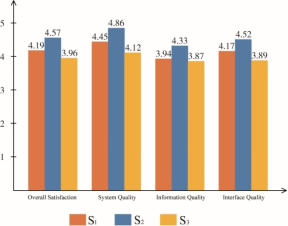
Upon completion, participants were asked to fill out the standardized PSSUQ questionnaire. The evaluation encompassed four dimensions: Overall Satisfaction, System Quality, Information Quality, and Interface Quality. Widely used in the field of human–computer interaction, the PSSUQ is recognized for its high reliability and construct validity, providing a comprehensive reflection of users' subjective perceptions of system usability and experience.
During the research phase, a total of 100 questionnaires were distributed to the participants with the aim of gathering relevant data for analysis. Following the distribution, a meticulous screening process was undertaken to ensure the quality and relevance of the responses received. As a result of this screening, 93 valid and usable responses were successfully collected, which formed the basis for the subsequent analysis. To analyze the collected data, the widely recognized statistical software SPSS version 26.0 was utilized. The software enabled the researchers to conduct both statistical and reliability analyses on the data. The outcomes of these analyses were particularly noteworthy. The reliability of the questionnaire was assessed using the Cronbach’s α coefficient, which measures the internal consistency of the items within the questionnaire. The obtained Cronbach’s α coefficient was an impressive 0.989. This figure not only meets but significantly surpasses the conventional reliability threshold of 0.8, which is commonly accepted in the field of research. The high value of the Cronbach’s α coefficient indicates an extremely high level of internal consistency among the items in the questionnaire. This consistency is crucial as it affirms the questionnaire's appropriateness for further quantitative analysis. It suggests that the questionnaire is reliable and that the data collected can be trusted for making informed decisions and drawing accurate conclusions in the research study.
The analysis revealed that Scheme S
2 consistently outperformed the other two schemes across all four dimensions. It achieved the highest scores in system quality, clarity of information delivery, interface friendliness, and overall satisfaction. The mean evaluation scores for S
2 were significantly higher than those for S
1 and S
3, indicating that elderly users generally found this scheme to be the most convenient, intuitive, and comfortable for actual use. Scheme S
1 ranked second, whereas Scheme S
3 received the lowest scores due to its complex interface and unclear feedback mechanisms (
Figure 3).
These findings are entirely consistent with the ranking results obtained from the CPT-based evaluation model, thereby reinforcing the reliability, consistency, and practical utility of the proposed evaluation method. The high degree of alignment between user-reported perceptions and the earlier model-based evaluation results confirms that the method is not only theoretically robust but also of strong practical value, offering effective support for product design optimization and decision-making.
Figure 3. Bar chart of questionnaire analysis results.
6. Conclusion
Drawing upon the perspective of behavioral economics, this study developed an evaluation method for smart shopping cart design schemes tailored to elderly users by integrating subjective–objective weighting techniques with theories of bounded rationality. The method demonstrates strong adaptability and practical applicability at both theoretical and applied levels, offering three primary advantages:
Incorporation of behavioral psychology to reflect realistic decision mechanisms. By introducing Cumulative Prospect Theory (CPT), the model accounts for elderly users' risk preferences and loss aversion when selecting among design schemes. This approach makes the evaluation framework more consistent with actual behavioral characteristics, overcoming the limitations of the traditional "rational actor" assumption.
Integration of subjective expertise and objective data to optimize weighting logic. Through the combined use of the Analytic Hierarchy Process (AHP) and the entropy weight method, the model leverages expert knowledge while preserving the discriminative information embedded in empirical evaluation data. This enhances the scientific rigor and fairness of the indicator system, providing a reliable foundation for multi-criteria design evaluation.
Verifiable outcomes with strong practical relevance. Usability testing with the PSSUQ questionnaire collected first-hand user feedback in real shopping scenarios. The experimental results were highly consistent with the theoretical rankings produced by the evaluation model, confirming its predictive accuracy and real-world effectiveness. This validates the method as a practical tool that can directly support product development and optimization decisions.
Despite the significant contributions that have been made in this area, there are still certain limitations that persist and need to be addressed. For instance, it has been observed that some elderly respondents, due to potential comprehension differences, have displayed ambiguous judgments. This ambiguity in their responses has, in turn, impacted the accuracy of scoring in the evaluations. Furthermore, the process of parameterizing risk factors and establishing reference points for assessments also necessitates additional refinement and careful consideration. Looking ahead, future research could potentially progress and evolve in the following key areas: (1) the utilization of graphically enhanced questionnaires could be a significant step forward in improving understanding among elderly users, thereby potentially reducing ambiguity in their responses; (2) integrating voice prompts and operational demonstrations could greatly assist participants in navigating through and completing evaluations with greater ease and accuracy; and (3) the creation of multimodal interaction tools could greatly enhance the inclusivity and usability of evaluation systems, making them more accessible for age-friendly product design. These advancements could lead to more accurate and user-friendly evaluation processes, catering specifically to the needs and capabilities of the elderly population.
Abbreviations
CPT | Cumulative Prospect Theory |
AHP | Analytic Hierarchy Process |
PSSUQ | Post-Study System Usability Questionnaire |
CR | Consistency Ratio |
SPSS | Statistical Product and Service Solutions |
KJ method | Kawakita Jiro Method |
Conflicts of Interest
The authors declare no conflicts of interest.
References
| [1] |
Xu, X., Cheng, Y., & Chen, G. (2020). Research on evaluation method and application of RV styling based on AHP. Journal of Mechanical Design, 37(6), 140–144.
https://doi.org/10.13841/j.cnki.jxsj.2020.06.022
|
| [2] |
Peng, D., & Bian, Z. (2021). Hesitant fuzzy Kansei–TOPSIS evaluation method for product design schemes. Systems Science and Mathematics, 41(6), 1630–1647.
https://doi.org/10.12341/jssms20258
|
| [3] |
Chen, Y., & Xiao, D. (2018). Experience-guided design for mobile financial decision-making based on prospect theory. Packaging Engineering, 39(10), 209–214.
|
| [4] |
Kahneman, D., & Tversky, A. (1979). Prospect theory: An analysis of decision under risk. Econometrica, 47(2), 263–291.
https://doi.org/10.2307/1914185
|
| [5] |
Tversky, A., & Kahneman, D. (1992). Advances in prospect theory: Cumulative representation of uncertainty. Journal of Risk and Uncertainty, 5(4), 297–323.
https://doi.org/10.1007/BF00122574
|
| [6] |
Zhang, B., Juan, Z., & Ni, A. (2013). Applicability of prospect theory in travel behavior research. Journal of Beijing Institute of Technology: Social Sciences Edition, 15(1), 54–62.
|
| [7] |
Liu, Q., Liu, X., & Hong, D. (2020). A TOPSIS multi-attribute decision-making method based on cumulative prospect theory. Ship Electronic Engineering, 40(3), 32–35.
|
| [8] |
Wei, L., & Chen, G. (2020). Interval Pythagorean fuzzy prospect multi-stage multi-attribute emergency decision-making method. Computer Engineering and Applications, 56(24), 109–115.
https://doi.org/10.3778/j.issn.1002-8331.2007-0255
|
| [9] |
Li, X., Hou, X., Yang, M., et al. (2021). Multi-level grey comprehensive evaluation–based optimal decision model for industrial design schemes and its application. Journal of Graphics, 42(4), 670–679.
https://doi.org/10.11996/JG.j.2095-302X.2021040670
|
| [10] |
Wang, M., & Zhai, H. (2020). Evaluation method and application of rehabilitation training product design for autistic children based on AHP and TOPSIS. Journal of Graphics, 41(3), 453–460.
https://doi.org/10.11996/JG.j.2095-302X.2020030453
|
| [11] |
Hu, J. (1999). Systems Engineering. Beijing: China Statistics Press.
|
| [12] |
Li, F., He, S., Zhi, J., et al. (2020). Satisfaction evaluation of high-speed train passenger coach design based on AHP–entropy method. Journal of Mechanical Design, 37(2), 121–125.
https://doi.org/10.13841/j.cnki.jxsj.2020.02.017
|
| [13] |
Liu, J., Yu, S., & Chu, J. (2017). Cabin comfort evaluation of civil aircraft based on comprehensive subjective–objective weighting. Journal of Graphics, 38(2), 192–197.
https://doi.org/10.11996/JG.j.2095-302X.2017020192
|
| [14] |
Wu, Y. N., Ke, Y. M., Xu, C. B., et al. (2019). An integrated decision-making model for sustainable photovoltaic module supplier selection based on combined weight and cumulative prospect theory. Energy, 8, 1235–1257.
https://doi.org/10.1016/j.energy.2019.06.027
|
| [15] |
Sha, X. Y., Yin, C. C., Xu, Z. S., et al. (2021). Probabilistic hesitant fuzzy TOPSIS emergency decision-making method based on cumulative prospect theory. Journal of Intelligent & Fuzzy Systems, 40(3), 4367–4383.
https://doi.org/10.3233/JIFS-201119
|
Cite This Article
-
-
@article{10.11648/j.edu.20251406.15,
  author = {Hu Shan and Luo Yiming},
  title = {Design Evaluation of Smart Shopping Carts for the Elderly},
  journal = {Education Journal},
  volume = {14},
  number = {6},
  pages = {303-308},
  doi = {10.11648/j.edu.20251406.15},
  url = {https://doi.org/10.11648/j.edu.20251406.15},
  eprint = {https://article.sciencepublishinggroup.com/pdf/10.11648.j.edu.20251406.15},
  abstract = {As global population aging intensifies, elderly users are increasingly becoming an important focus in retail service design. However, most existing smart shopping carts fail to fully consider the behavioral characteristics, cognitive limitations, and operational demands of older adults, resulting in reduced usability and adoption rates. To address this issue, this study proposes a design evaluation method based on Cumulative Prospect Theory (CPT), aiming to integrate psychological mechanisms such as reference dependence, loss aversion, and probability weighting into product assessment. By combining the Analytic Hierarchy Process (AHP) with the entropy weight method, a hybrid multi-criteria evaluation framework is constructed to enhance both subjective rationality and data-driven objectivity. Expert scoring, user testing, and CPT-based evaluation were conducted to compare three elderly-oriented smart shopping cart design concepts, and the findings were further validated using the Post-Study System Usability Questionnaire (PSSUQ). Results indicate that the proposed method effectively reduces subjective bias, improves evaluation reliability, and provides practical guidance for optimizing age-friendly product design. This study therefore offers both theoretical insights and methodological support for advancing inclusive design practices.},
 year = {2025}
}
 Copy
|
Copy
|
 Download
-
TY  - JOUR
T1  - Design Evaluation of Smart Shopping Carts for the Elderly
AU  - Hu Shan
AU  - Luo Yiming
Y1  - 2025/12/27
PY  - 2025
N1  - https://doi.org/10.11648/j.edu.20251406.15
DO  - 10.11648/j.edu.20251406.15
T2  - Education Journal
JF  - Education Journal
JO  - Education Journal
SP  - 303
EP  - 308
PB  - Science Publishing Group
SN  - 2327-2619
UR  - https://doi.org/10.11648/j.edu.20251406.15
AB  - As global population aging intensifies, elderly users are increasingly becoming an important focus in retail service design. However, most existing smart shopping carts fail to fully consider the behavioral characteristics, cognitive limitations, and operational demands of older adults, resulting in reduced usability and adoption rates. To address this issue, this study proposes a design evaluation method based on Cumulative Prospect Theory (CPT), aiming to integrate psychological mechanisms such as reference dependence, loss aversion, and probability weighting into product assessment. By combining the Analytic Hierarchy Process (AHP) with the entropy weight method, a hybrid multi-criteria evaluation framework is constructed to enhance both subjective rationality and data-driven objectivity. Expert scoring, user testing, and CPT-based evaluation were conducted to compare three elderly-oriented smart shopping cart design concepts, and the findings were further validated using the Post-Study System Usability Questionnaire (PSSUQ). Results indicate that the proposed method effectively reduces subjective bias, improves evaluation reliability, and provides practical guidance for optimizing age-friendly product design. This study therefore offers both theoretical insights and methodological support for advancing inclusive design practices.
VL  - 14
IS  - 6
ER  -
Copy
|
Download





 Share This Article
 Twitter
 Linked In
 Facebook